2014年6月23日 星期一

China's Planned the World-Tallest Tower

China's planned buildings combine amazing height with green technologies that seem almost too good to be true.


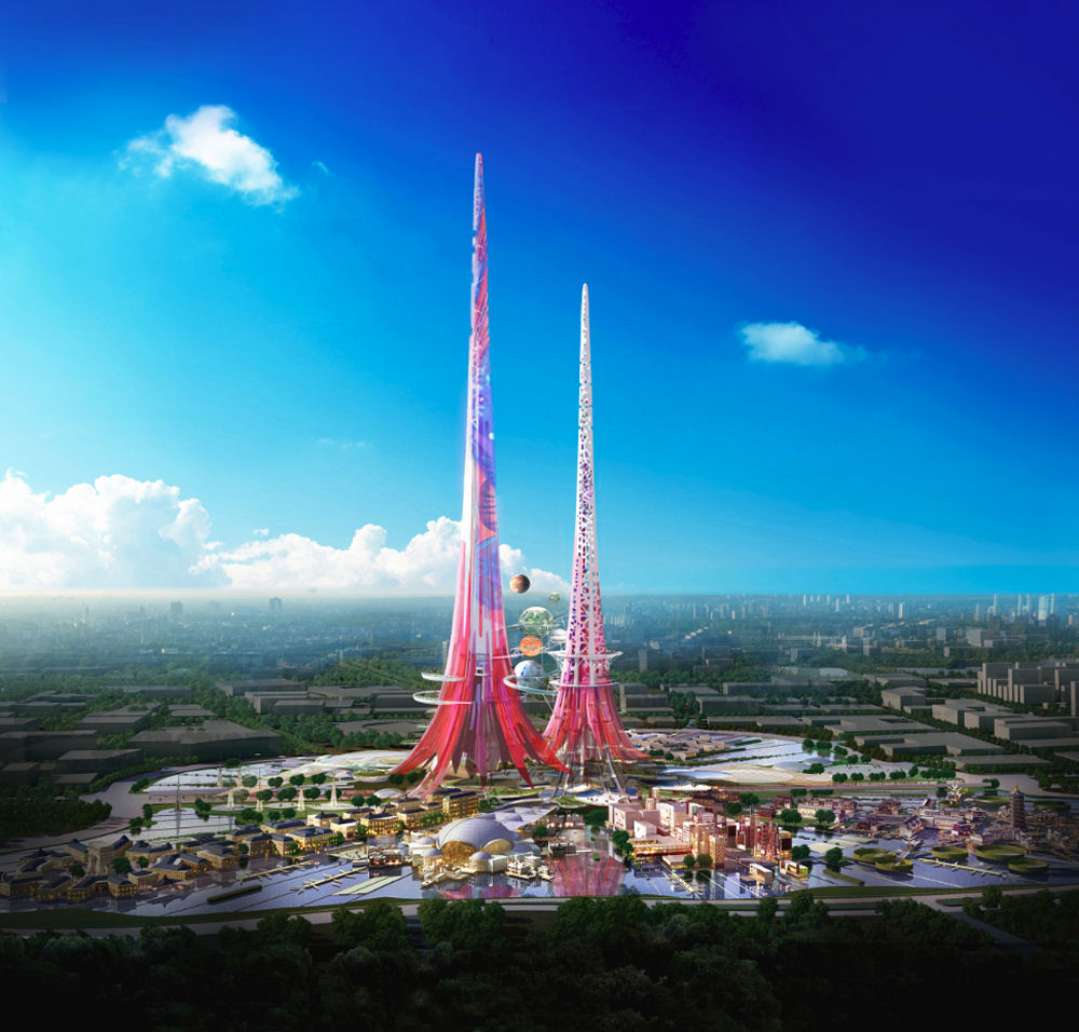
Phoenix Towers CGI via Inhabitat

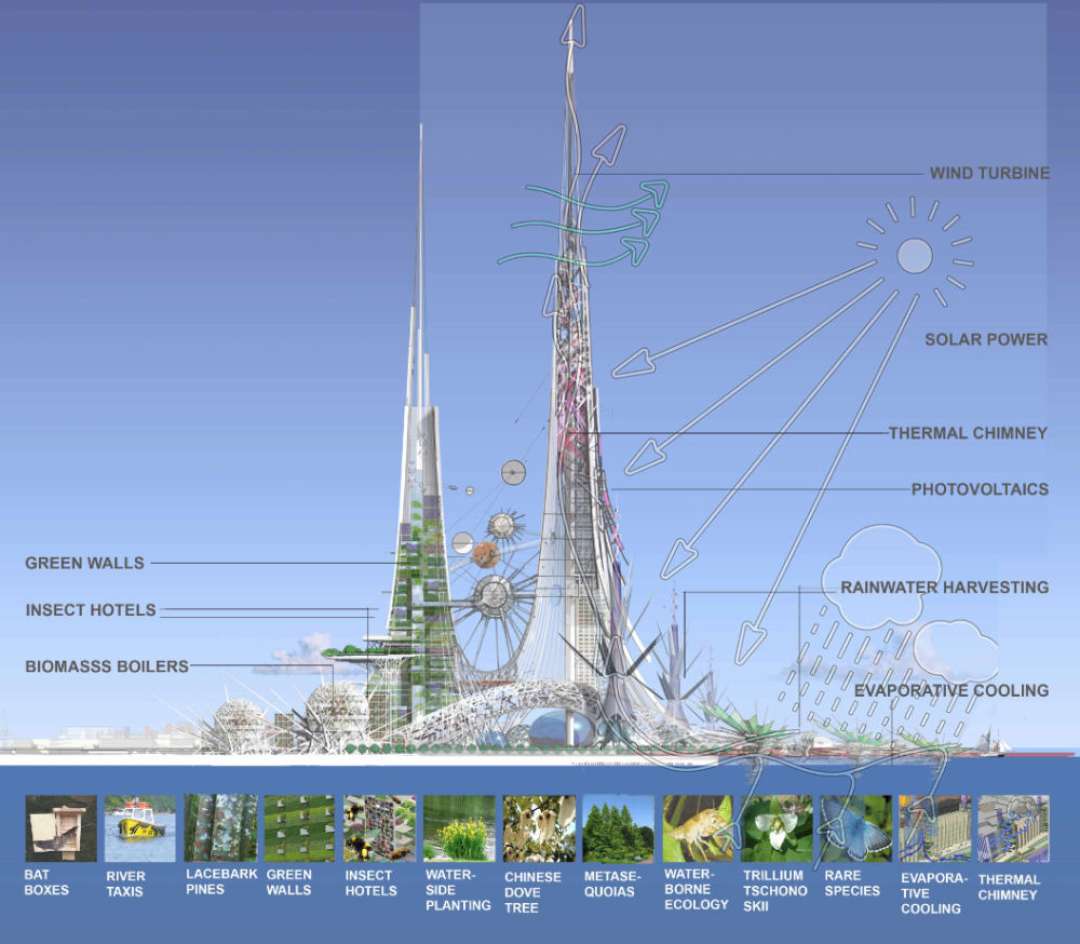
Section via World Architecture News

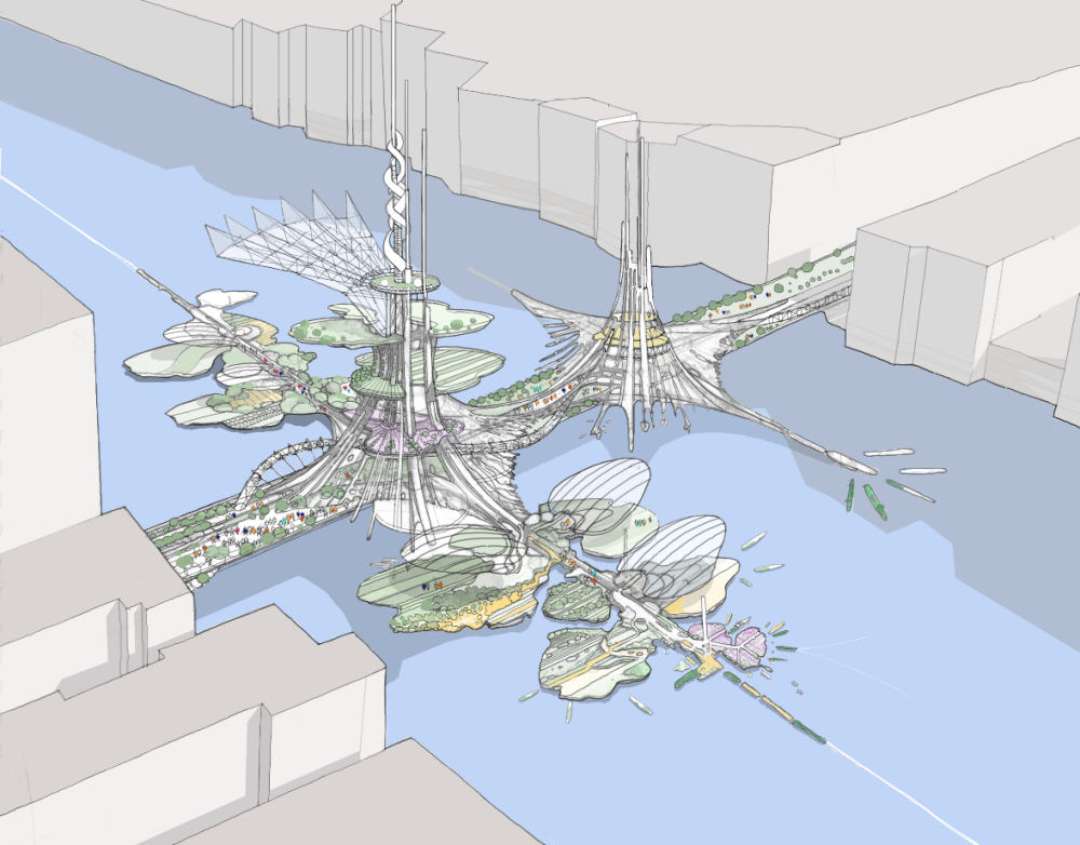
3D Sketch Model. Image via World Architecture News

The Phoenix Towers will be built in China’s 10th-biggest city, Wuhan, which is located in the center of the country. The city is split between the banks of the Yangtze River and riddled with lakes. Given its proximity to moving water, it’s only natural that the towers be built with renewable energy in mind. The taller, “male” tower, named Feng, will loom one kilometer high, its sides equipped with photovoltaic panels and a wind turbine couched in its tapering spire. Its sister tower, Huang, will have walls filled with plants (“green walls”), house insect hotels, and be equipped with biomass boilers, which heat the structures by burning plant fuel. At its base, the towers will collect rainwater.

Reference:
1. Eco Porn: Are Wuhan’s Phoenix Towers an Environmental Novelty Act or the Real Green Deal?, Architizer.
2. Tower Plans Unveiled for World's Tallest, Pinkest Towers, Popular Sceince

Cable-free Connections

Technology Overview

A simple, safe and inexpensive technology to power and charge everyday electrical devices whilst simultaneously exchanging data without the need for cables. This is achieved by employing metamaterials using recently discovered properties of artificial magnetic resonators that support magneto-inductive waves.


Potential Applications

The use of electrical devices is ubiquitous and as such the technology may be applied in an extraordinarily wide range of applications and fields. Metamaterial technology may replace existing (often congested) electrical infrastructures in:

Technology Features & Specifications

This technology provides a means to wirelessly power and exchange data over distance using simple inexpensive engineering. The innovation employs metamaterials using recently discovered properties of artificial magnetic resonators that support magneto-inductive waves. This allows the rapid transfer of power and data between electronic devices without the use of conventional, limiting technologies.

Customer Benefits

The architecture of computers and other electrical devices requiring microprocessors and circuit boards connected to peripheral devices can be entirely re-engineered using infinitely interchangeable (and therefore recyclable) components manufactured as self-contained units. This will increase product life while reducing cost, carbon footprint and wastage.
  • No wires or cables
  • Simple and cheap to manufacture
  • No limit to number of connected devices
  • No vulnerable connectors to disconnect
  • Weatherproof data connections
  • Can be woven into flexible materials
  • Integrated into furniture, walls, flooring
  • Frequency tuneable and safe