I. Cooling and heating systems
a. Geothermal
Development in UK (by ICE)
Energy pile: (European Experience) (similar to
closed loop system)
- Possible extraction values for heat exchangers is between 20 W/m and 100 W/m subject to underground situation an operation hours;
- For the borehole heat exchanger it should be between 100 and 150 kWh / (m*a)
- Return on investment of such systems is around 8 – 12 years comparsion with oil heating systems
- Thermal properties: Thermal conductivity is the capacity of a material to conduct or transmit heat; Thermal diffusivity describes the rate at which heat is conducted through a medium. It is related to thermal conductivity, specific heat and density.
Site Conditions - Initial consideration
Geothermal International (Skanska)TM
Wetland Park is one of few examples in Hong Kong. There is adopted geothermal heat pump air-conditioning system (GHP A/C) with a
total cooling capacity of 2500kW. The GHP A/C system consists of a ground-coupled heat-pump air-conditioning unit, vertical geothermal closed-loop heat exchanger, and aqua-thermal closed-loop heat exchanger. The geothermal heat exchanger is formed by
468 pairs of 32mm diameter vertical high-density polyethylene pipes, each pipe being 50m in length. As a result,
25% of energy is saved according to
news.gov.hk.
地熱熱泵 ( 地換熱系統 ) (EMSD)
國內節能環保型地源泵空調系統
b. Water-cooled air conditioning system
(i) Cooling tower: energy saving up to 20% compared with conventional air-cooled system. A
pilot scheme was launched by EMSD since 2000. However, safety measures for
Prevention of Legionnaire’s Disease is concerned.
(ii) Central sea water: see brief by
HKU or
EMSD
(iii) District Cooling Scheme (DCS): similar (ii) enables energy saving up to 35%.
Studies by EMSD,
Water-cooled Air Conditioning Systems, Publications
c. Natural ventilation
e.g. Solar passive design
The basic natural processes that are used in passive solar energy are the thermal energy flows associated with radiation, conduction, and natural convection. When sunlight strikes a building, the building materials can reflect, transmit, or absorb the solar radiation. Up to date, well developed in passive heating but less developed in passive cooling (
by Sustainable Sources).
Figure 1: Summer Venting Sunroom for cooling building
Figure 2: Summer Venting Thermal Mass Wall
(Source:
http://passivesolar.sustainablesources.com/. This website also show other passive systems)
Useful link:
Climatic Design of Buildings in HK, HKU
II. Renewable energy
a. Solar photovoltaic (PV) panels: This technology converts solar energy into electricity and either stores it in batteries, transmits it into the electricity conveyance grid, or uses it directly. The panels are made of crystalline or amorphous silica materials. Three common types are avaliable:-
| Photovoltaic type | Mono-crystalline | Poly-crystalline silicon | Amorphous silicon |
| Advantages | High efficiencies (14%-16%) | Cheaper than mono-crystalline | - Cheaper than crystalline cells
- Can use curved surface |
| Disadvantages | Complicated and expensive | Less efficient than mono-crystalline around 13%-15% | Less efficient than crystalline around 5%-7% |
Output: 1000W/m² under irradiance level with air mass of 1.5 or temperature at 25°C. In HK, the annual power output for cyrstalline modules to be installed from horizontal to tilting angle is 22° toward South is around 120kWh/m². Annual output could reduce to be around 70kWh/m². Expected lifetime for maintenance is 20 years.
Details see EMSD's
leaflet.
b. 酒精「零污染」發電
http://www.takungpao.com/news/08/03/28/JX-883836.htm
III. Daylighting and illumination systems
a. Natural daylighting; e.g.
sidelighting (lightling reflector),
toplighting,
light tube/pipe and
lighting diffusion.
Example projects in HK: see
HKEE Net website
b. Luminaire/ Lamp (source:
HKEE Net &
Energy Land by ESMD)
(i)
Compact fluorescent lamp (CFL): 4 times more efficient and last up 16 times longer than incandescent.
(ii)
Induction lump: Electrodeless lamp with high frequency. It is is based on the principles of induction and light generation via a gas discharge. The life can reach 60,000 hours longer than fluorescent lamps (between 5,000 to 15,000 hours). The luminous efficacy is ranged from 48 to 80 lm/W and can up to 24% compared with high intensity discharge (HID) lamps
(iii)
Light Emitting Diode (LED): A semiconductor diode supported by a reflector and encapsulated with an epoxy lens for controlling light distribution. The luminous efficacy is ranged from about 12 to 55 lumen/W, depending on the
lamp colour. When compared with fluorescent tubes, LEDs is less efficacy (fluorescent tubes have luminous efficacy from 50 to 90 lumen/W). In 2008, the LED efficacy is up to 115 to 150 lm/W. (See
http://en.wikipedia.org/wiki/Light-emitting_diode)
(iv)
T5 fluorescent tube: diameter of 16 mm (5/8"). Luminous efficacy is about 100 lm/W more efficient than the T8 or T12 lamps (70 lm/W and 80 lm/W respectively). If taking into account the high frequency operation and reduced power loss due to the use of electronic ballast, 20 - 30% of energy reduction.
Example project, see ESMD website:
Report of the Pilot High Output ‘T5’ Fluorescent Lighting Project at East Kai Tak Indoor Games Hall
c. Other daylighting systems see
http://www.arch.hku.hk/~kpcheung/daylight/dayindex.htm
IV. Green Roof Research
HKU Greenroof research
http://www.hku.hk/bse/greenroof/
Study on Green Roof Application in Hong Kong Final Executive Summary by ASD
Study on Green Roof Application in Hong Kong Final Report by ASD
Knowledge about tree planting, Development Bureau
CM Hui (HKU)
http://web.hku.hk/~cmhui/present.htm
V. Case study
ICE/RICS Lecture notes
Study 1 : Skyhouse
Renewable energy
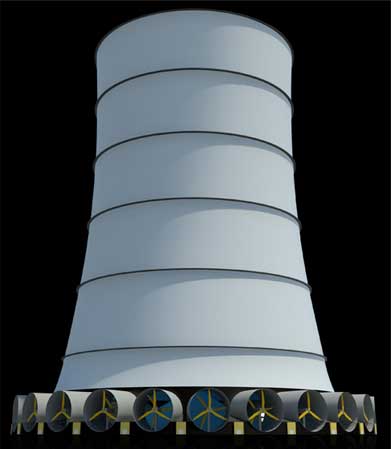
1. Wind turbines
2. Photo-voltaic panels at South
3. Wind permeable structures
Sustainable feature
1. Green roof
Study 2 Wetland
Wetland Park
The Park includes an indoor exhibition hall of 10,000 square meters, concealed under a grass slope. The environmentally sustainable design concepts adopted include:
Sustainable Planning
- Minimum footprint to maximize open space
- Building disposition taken into consideration of the sun path to avoid solar heat
Ecological Impact
- Retaining existing site characteristics
- Retaining existing vegetations
Energy Conservation
- Upgrading building services to improve energy efficiency, including the application of geothermal system
- Overall Thermal Transfer Value is between 3.8watts/m2 to 16.9watts/m2
- Timber screens at appropriate locations to shading off direct sunlight
- Special galleries and lecture room to promote green concepts
Visual Impact
- Building composition is integrated with surroundings
- Exterior wall and colors are in-line with surrounding buildings
Environmental Health & Hygiene
- Toilets are provided with natural light and with stand-by mechanical means
- No A/C is provided for satellite building and bird hides
Daylight, Illumination & Visual Access
- Front portal, atrium and toilets are provided with natural ventilation
- Timber louvers can diffuse direct sunlight
Water Conservation
- Water in artificial lakes is naturally treated
- Water conservation cistern is only 6 liter in consumption
Construction Waste Management
- Stone slabs recycled as pavers to save construction waste
- Formwork recycled is modified as temporary fence
Materials Use & Specification
- PFA was used in concrete mix
- Bricks recycled and with local pavers to reduce overseas procurement
- Oyster shells recycled to promote environmental initiative
Functionality
- The phase 1 building can be converted into an anteroom
Other ASD's projects see
http://www.archsd.gov.hk/english/reports/e3118.pdf
VI. Policy
1. International Emission Trading clause in Article 17 is now implemented in EU & UK, see
Wikipedia.
2.
中華人民共和國節能能源法
3.
國家環境保護總局建設項目環境影響評價文件審批程式規定
4.
China Environmental Law blog
5.
Rating schemes for green buildings in elsawhere
VII. Good Practices in HK
1.
Building Energy Codes (BEC) - EMSD
2.
Hong Kong Energy Efficiency Registration Scheme for Buildings (HKEERSB) - EMSD
3.
Life Cycle Energy Analysis of Building Construction - EMSD
4.
Indoor Air Quality Certification Scheme for Offices and Public Places - EPD
5.
Building Environmental Assessment Method (BEAM) - HKBEAM
6.
Sustainable Design For Building - ASD